
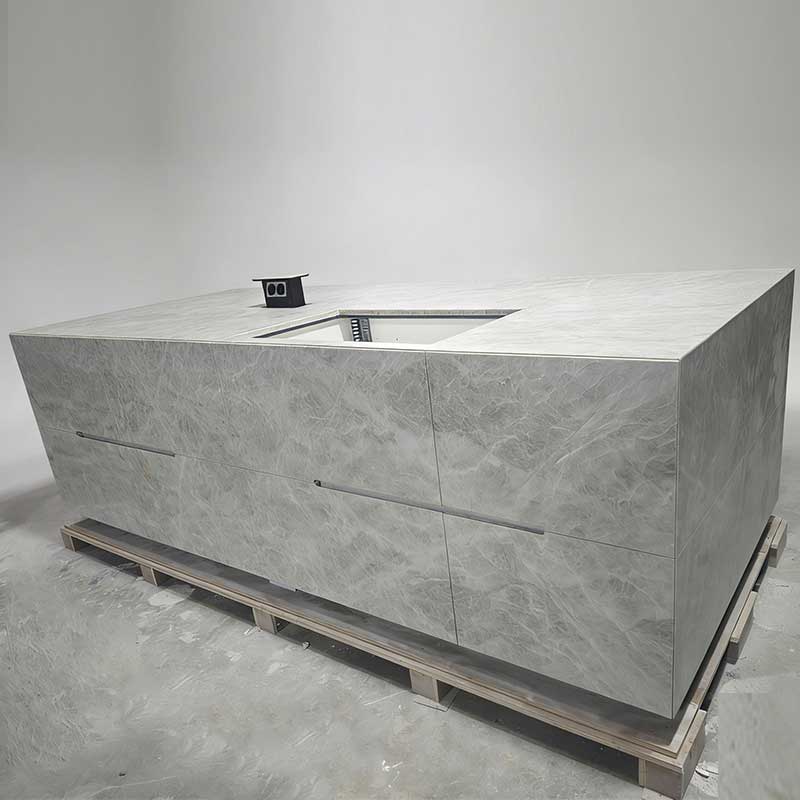
The requirements for countertops vary significantly depending on their location, function, frequency of use, and environment. Countertop materials are showing a trend towards diversification, ranging from natural stone to innovative composite materials, with each material offering distinct advantages. The following is a detailed analysis and recommendation of materials for dining tables, kitchen islands, and outdoor countertops.
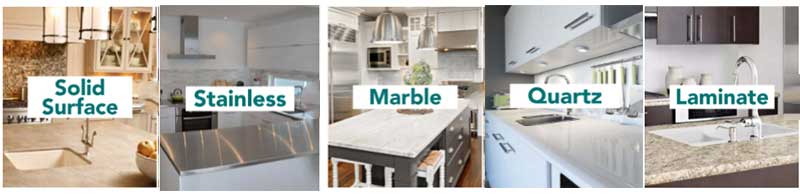
| Feature | Natural stone | Engineered stone | Solid surface | Laminated | Stainless steel |
| Durability | Hard but brittle, easily cracked | High hardness, scratch-resistant, stain-resistant, | Impact resistant | Easily scratched, not resistant to heat. | easily scratched |
| Heat Resistance | excellent | generally | excellent | bad | Excellent |
| Stain Resistance | Porous surfaces require regular sealing | Excellent | Excellent | Excellent | Excellent |
| Environmental Friendliness | Medium (high energy consumption during extraction) | Medium (including resin and mined quartz) | Medium-high | Medium | High |
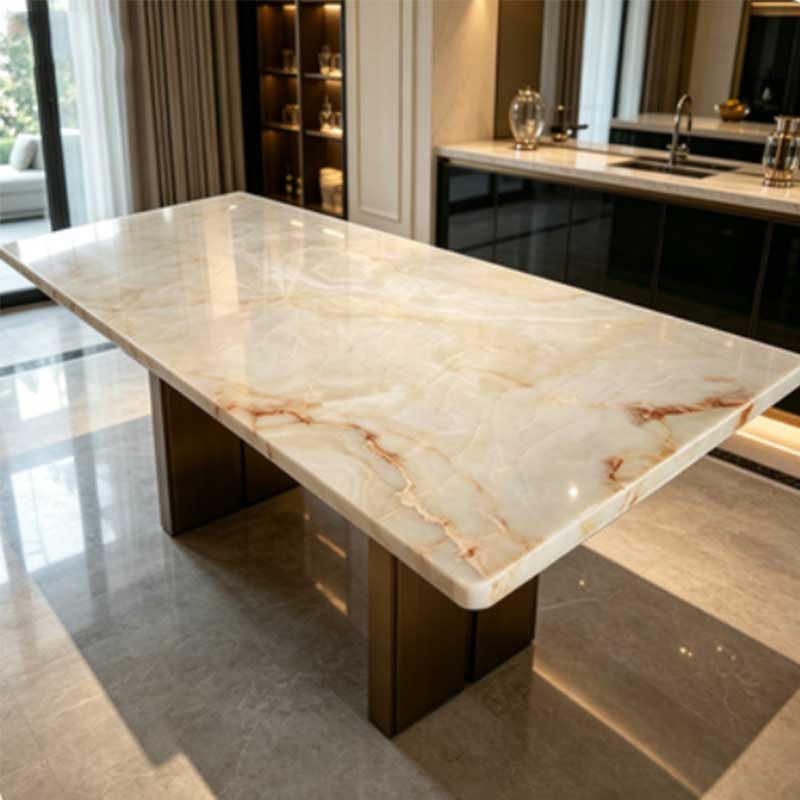
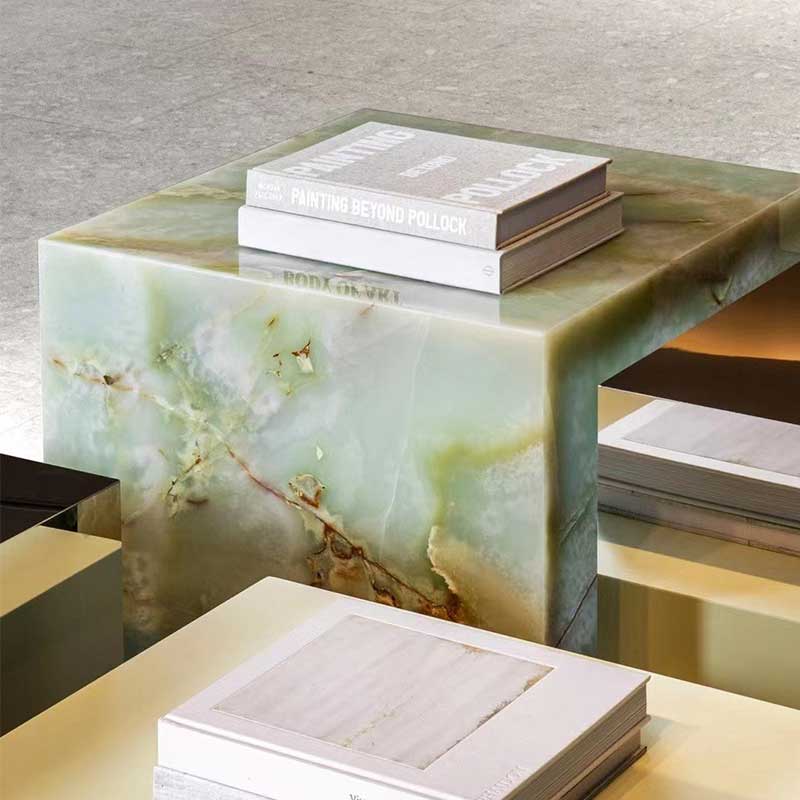
Marble Countertops
Applicable Scenarios: Bathroom countertops, living room coffee tables, light luxury style reception desks, display stands.
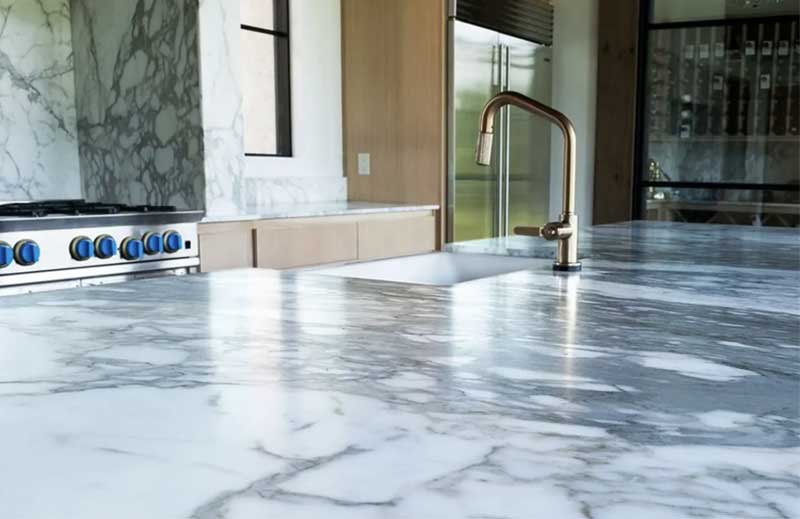
Pros:
High aesthetic appeal,
Good processing performance
Cons:
Low hardness, easily scratched and chipped
Not resistant to acid, contact with vinegar, lemon juice, etc
Requires frequent maintenance
Engineered stone Countertops
Applicable Scenarios: Kitchen countertops, bathroom vanity tops,
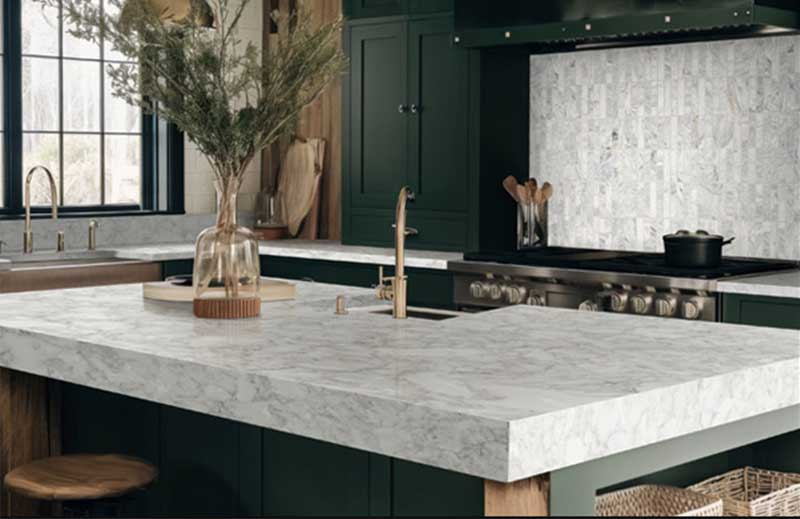
Pros:
Strong stain resistance
Wear-resistant and scratch-resistant
Easy to process and can be seamlessly joined
Cons:
Generally poor heat resistance
The texture is somewhat rigid
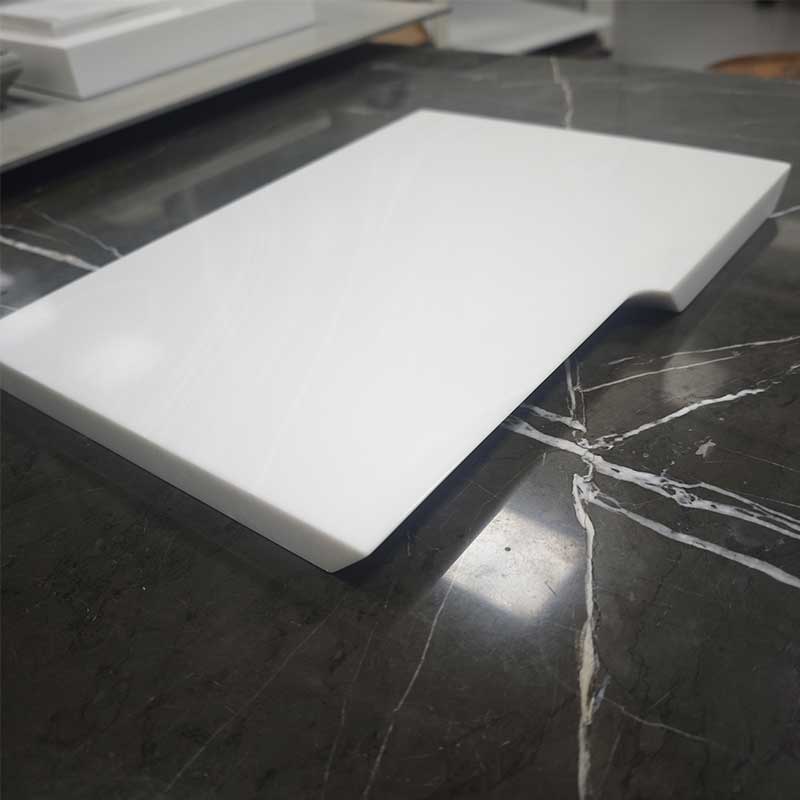
Solid surface stone Countertops
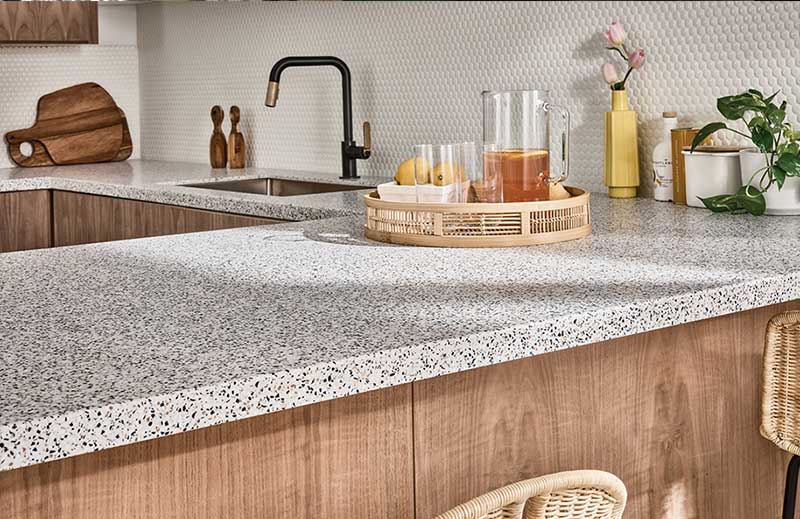
Applicable Scenarios: Irregularly shaped countertops (such as curved reception desks), built-in washbasins
Pros:
Extremely malleable
Can be customized into any shape;
Seamless joints, high aesthetic appeal;
Easy to repair, scratches can be polished and refinished.
Cons:
Low hardness,
Easily scratched;
Poor heat resistance,
Stainless Steel Countertops
Applicable Scenarios: Commercial kitchens, laboratory workbenches, industrial-style home kitchens.
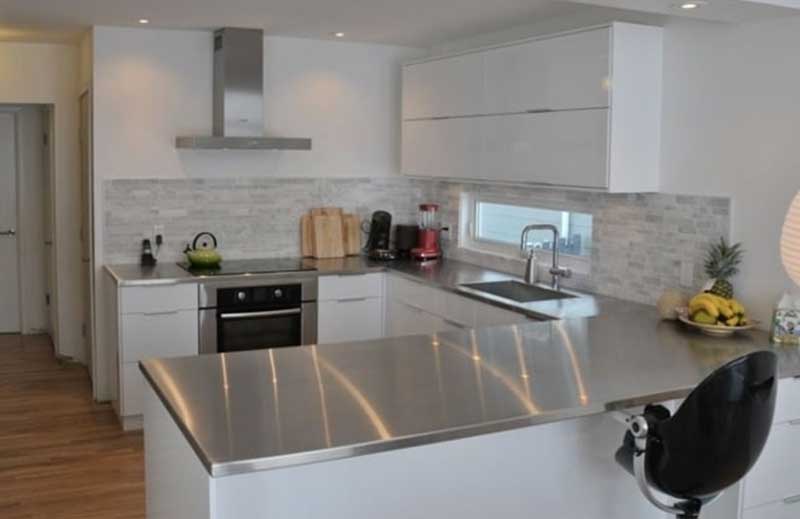
Pros:
Strong antibacterial properties,not prone to bacterial growth;
Corrosion-resistant
Impact-resistant
Waterproof and moisture-proof
Easy to maintain
Cons:
Cold aesthetic, lacking in homey warmth
Easily shows fingerprints and scratches
High thermal conductivity, feels cold to the touch in winter
With the advancement of green building policies and upgrading consumer demands, environmentally friendly and multi-functional integrated materials are becoming the trend in countertop materials. When choosing countertops, consider the usage scenario, interior design style, budget, and maintenance costs.
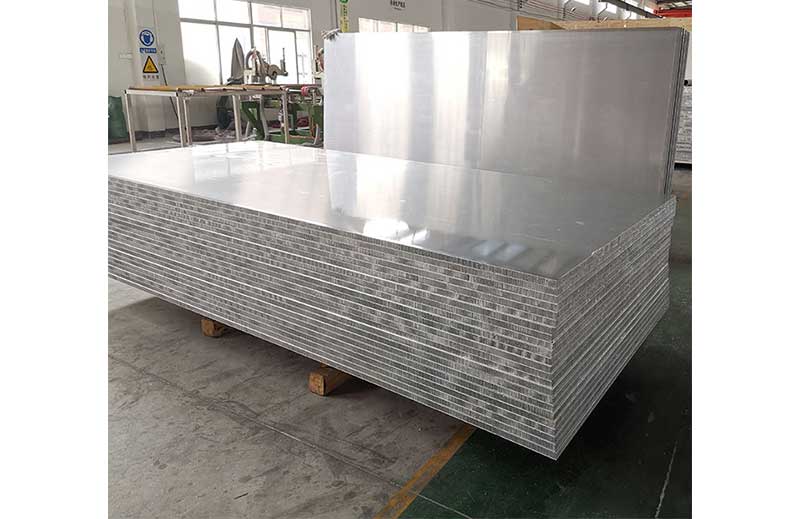
Honeycomb furniture countertops , is typically referring to a composite structure of a base panel + aluminum honeycomb core. Compared to traditional countertop materials such as solid wood, pure stone, quartz stone, and stainless steel, offer significant advantages in terms of performance, cost, and practicality.
-Lighter weight, easier installation
- Superior high-temperature resistance
- Higher Aesthetics and Decorative Value